

Ideal for post-hospital recovery or caregiver breaks. Our short-term program offers professional care, warm meals, and engaging activities — with no long-term commitment required.

Make Arcadia your forever home. Our long-term assisted living offers personalized care plans, vibrant community life, and a warm, family-like atmosphere — where every resident truly belongs.
Over 25 years of trusted senior care in Portland. Our award-winning team provides compassionate, person-centered care that truly makes a difference — every single day.
Arcadia is designed to provide life-enriching accommodations for your loved one. We offer private studios and one-bedroom suites, thoughtfully tailored to meet personal preferences and financial needs. With no buy-in fees or long-term lease commitments, our suites include all amenities and programs, starting at $5,843 per month. See our full pricing breakdown for what is included and how to pay for care.
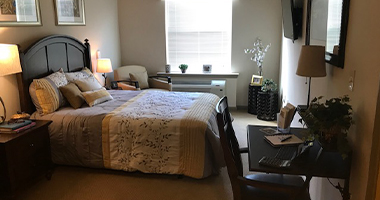


No hidden fees. Every suite includes meals, care, utilities & activities.
Month-to-month leasing with zero long-term commitment required.
Move-in ready suites with quality furniture — just bring your personal items.
Call us or book online — we'd love to show you around in person.
Services, costs, comparison, and tips for choosing the right community
Finding the right care for an aging parent, spouse, or loved one is an important decision. Assisted living can provide a comfortable residential environment for older adults who want to maintain their independence while receiving help with everyday activities.
Unlike a nursing home, assisted living is generally designed for people who need support with daily living but do not require the level of continuous skilled nursing care typically provided in a nursing facility. Services and regulations can vary by state and by community, so families should carefully review what each provider offers before making a decision.
Assisted living is a type of senior housing that combines private or semi-private residential accommodations with personal care and supportive services. Depending on the community, residents may receive assistance with activities such as bathing, dressing, eating, using the bathroom, taking medications, housekeeping, and transportation.
Many assisted living facilities also provide meals, social activities, wellness programs, housekeeping, and opportunities for residents to participate in community events. The goal is to provide support while helping older adults maintain as much independence and choice as possible.
The Administration for Community Living notes that assisted living facilities can vary significantly in size, services, and terminology across the United States.
Assisted living may be appropriate for seniors who are finding certain daily activities difficult to manage independently but who do not need the intensive medical care of a nursing home.
For example, a person may consider assisted living if they need occasional or regular help with:
Every resident has different needs. Before selecting an assisted living facility, families should discuss the senior's current abilities, medical needs, lifestyle preferences, and potential future care requirements with appropriate professionals.
The services offered by assisted living facilities differ from one community to another. Common services may include accommodation, meals, personal care assistance, housekeeping, laundry, transportation, recreational activities, and wellness programs.
Some communities may also provide medication management, scheduled health checks, physical activity programs, therapy coordination, or specialized memory-care services.
It is important not to assume that every facility provides the same level of care. Ask for a detailed list of included services, additional fees, staffing arrangements, emergency procedures, and care limitations before signing an agreement.
The ACL describes assisted living as a residential arrangement that can provide individualized personal care, assistance with activities of daily living, medication help, laundry, housekeeping, and other services, while generally providing less intensive care than a nursing home.
When searching online for assisted living near me, location is only one factor to consider. A facility that is close to family can make visits easier, but the quality and suitability of care should remain the priority.
Start by creating a list of assisted living facilities near me and compare them based on:
Visiting several communities in person can also help families understand the atmosphere and observe how staff interact with residents.
Assisted living and nursing homes are not the same. Assisted living generally focuses on residential living and assistance with personal care and daily activities. Nursing homes typically provide a higher level of medical and nursing care for people who require more intensive support.
Medicare states that it generally does not pay for long-term custodial care, while Medicaid may help cover certain long-term services depending on eligibility and state rules.
Therefore, families should investigate payment options carefully rather than assuming Medicare or another insurance plan will cover assisted living expenses.
The cost of an assisted living facility can vary considerably depending on location, accommodation, services, level of care, and the community itself. Additional services may also increase the monthly cost.
Before choosing a facility, request a written pricing breakdown. Ask whether the quoted price includes meals, utilities, housekeeping, transportation, medication assistance, activities, and personal care. Also ask how prices change if the resident requires additional assistance later.
Understanding the complete cost upfront can help families avoid unexpected expenses.
Searching for senior assisted living near me is often the beginning of the process, not the final step. The best community should match the senior's care requirements, personality, preferences, budget, and desired lifestyle.
Take time to tour multiple communities, speak with staff and residents, review contracts, and ask detailed questions about care. Families should also understand what happens if a resident's health needs become more complex.
The right assisted living community can provide a balance of independence, safety, personal support, social connection, and comfort. With careful research and comparison, families can find an environment where their loved one receives appropriate support while continuing to enjoy a meaningful daily life.
Get answers to the most common questions about senior care
Assisted living is about $3,500 to $5,500. Memory care is about $4,500 to $7,000.
It needs more staff, specially trained caregivers, and secure buildings.
California and New York are usually higher. Georgia, Ohio, and Florida are usually lower. Confirm current prices with each community.
Higher care levels, medication management, special services, and move-in fees. Always ask for a written price breakdown.
Mostly savings and retirement funds. Others use long-term care insurance, Medicaid waivers, or VA Aid & Attendance.
Yes. Families pay nothing. Communities pay us when a resident moves in.